

TIMELESS TREASURES
INTRODUCTION
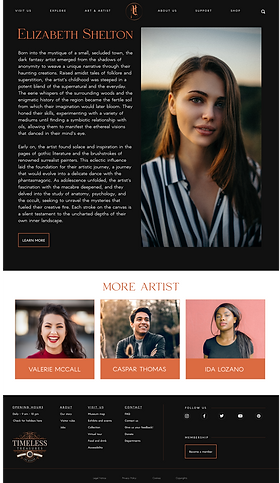
Timeless Treasures Art Museum, known for its unique dark fantasy art collection, had a website that failed to replicate the museum's immersive and diverse atmosphere, limiting its appeal to a wider online audience. We aimed to redesign the website to reflect the museum's luxurious, classic, modern vibe, offering an online experience akin to an in-person visit with enhanced visuals, user-friendly navigation, and comprehensive art and artist information.
As the lead designer, I focused on aligning the website's design with the museum's distinctive brand identity, working on layout, imagery, and interactivity to create an engaging and informative platform for a broad audience of tourists, art lovers, and students.
OVERVIEW
Problem
-
The website failed to capture the museum's unique dark fantasy atmosphere, limiting its appeal to a wider online audience.
-
The museum's existing website design didn't reflect its luxurious, classic, and modern vibe.
-
It lacked an engaging online experience compared to an in-person visit.
Immersive Experience Redesigned
We aimed to create an online experience akin to an in-person visit, fostering engagement and informing a broad audience (tourists, art lovers, and students).
RESEARCH
Users & Audience
Demographics:
Age: Varied audience, likely ranging from young adults (18+) to older adults (seniors).
Education: Likely to have some college education or higher, with an interest in the arts and culture.
Income: Varied but may skew slightly higher due to the museum's focus on dark fantasy art, which can be a niche interest.
Psychographics:
Art Enthusiasts: Deep appreciation for art, particularly dark fantasy and related styles (e.g., Gothic, Surrealism).
Culturally Curious: Open to exploring unique and unconventional art forms.
Experience Seekers: Desire engaging and immersive experiences,
both online and offline.
Tech-Savvy: Comfortable using websites and digital platforms to learn about art and plan visits.
Students: May be interested in art history, dark fantasy themes, or researching specific artists or movements.
Persona Development: To understand the needs and expectations of Timeless Treasures Art Museum's online audience, we created a user persona named Artistic Amelia.


Key Insights
We could identify her goals and frustrations when interacting with museum websites by stepping into Artistic Amelia's shoes. This user-centered approach helped guide the website redesign toward a more engaging and informative online experience for visitors like Artistic Amelia.
Journey Map
We developed a user journey map to gain insights into how visitors like Amelia, an aspiring dark fantasy artist, experience the Timeless Treasures Art Museum online. This map meticulously explores Amelia's interaction with the museum's website and potential visit, highlighting the positive aspects (highs) and areas for improvement (lows). Identifying these touchpoints and their associated challenges can optimize the museum's online presence and create a more engaging and inspiring experience for dark fantasy art enthusiasts like Amelia.
Amelia’s Journey
Amelia learns about a renowned art museum in a city she visits through a friend's recommendation. The friend raves about the exquisite paintings and the museum's unique atmosphere. Intrigued, Amelia decides to explore the museum further.
The Problem
Amelia has only 2 days left in her travel plans, and she needs and still has a lot of places to visit. She is not sure if the museum would be worth a visit. She wants to find more information about the museum and the feeling before wasting half a day. Her friend’s choice of places sometimes led her to not-so-good experiences.
Supporting research and documentation

Key Insights
-
The museum's online presence must be easily accessible and informative on mobile devices.
-
The museum website or app should provide key details and highlights for visitors on the move.
-
Need for credible online presence showcasing positive reviews, virtual experiences, and clear and concise information architecture.
DESIGN APPROACH/ SOLUTION
Moodboard Objectives
-
The mood board for the museum embodies a captivating blend of classical and vintage inspirations, creating a timeless atmosphere that exudes luxury and modern sensibilities.
-
The palette is simple yet rich, with dark hues dominating, evoking an air of sophistication and mystery.
-
The artistic elements infuse a sense of fantasy, transporting visitors to an enchanting world where art comes to life.
Moodboard

Competitive Moodboard
To understand the landscape and create a website that truly stands out, we've delved into the online presence of several museums. This competitive mood board will visually analyze their strengths and weaknesses, focusing on aspects like Visual Design, Information Architecture, User Engagement, and Target Audience.

Key Insights
-
We can identify inspiring design choices and avoid common pitfalls by dissecting these elements.
-
Ultimately, the competitive mood board guides us in crafting a website that surpasses the competition.
-
It helped us deliver an immersive online experience for dark fantasy art aficionados like Amelia.
INSIGHTS & REFLECTIONS
SITE MAPPING
I built a solid foundation with a sitemap for the Timeless Treasures website. Sitemaps helped me guide the design decisions, ensure a smooth user experience, and create an intuitive, informative website that reflects the museum's unique atmosphere.

Key Sights
-
Site mapping allows us to prioritize website functionalities and content based on the museum's goals and user needs.
-
By highlighting key sections like upcoming exhibitions or membership information, we can ensure these features are prominent and easily accessible.
-
The sitemap might also reveal areas where information is missing or needs to be created.
-
This could be anything from detailed artist biographies to virtual tours of the museum's collection.
INSIGHTS & REFLECTIONS
WIREFRAMING
Wireframing is the next step after site mapping. The wireframes depict how different elements like text, images, navigation menus, and buttons are arranged on each page. The goal was to ensure the website structure was clear, user-friendly, and aligned with the sitemap.
Layout Ideas
-
A clear and concise navigation bar provides easy access
to the website's main sections. -
A prominent carousel showcasing artists with high-quality visuals and enticing calls to action like "Learn More."
-
Detailed information about the exhibition, including dates, curatorial text, and artist biographies.
-
Clear calls to action to purchase tickets, view related exhibitions, or learn more about the artists.
-
All wireframes will be created with responsiveness in mind. This means ensuring the layout adapts seamlessly across desktops, tablets, and mobile devices.
-
On smaller screens, elements might need to be prioritized and rearranged for optimal usability.
-
Navigation menus may require a collapsible or hamburger menu format for easy access on mobile devices.
-
Text and button sizes will be adjusted to ensure readability and easy interaction on touchscreens.
Laptop Layout


Mobile Layout





Key Sights
-
The wireframes created a solid foundation for a user-friendly and visually appealing website.
-
Before diving into visual design, the wireframes were tested and refined in the next stage.
-
This ensures the final website effectively translates the museum's unique online atmosphere and caters to a broad audience, regardless of their device.
INSIGHTS & REFLECTIONS
STYLE GUIDE
User Flow
I've taken the key ideas from the wireframes – making information clear, navigation easy, and the art the star – and built a design system that captures the museum's spirit. The style guide reflects clean layouts, a timeless look with a modern twist, and a touch of mystery to create a captivating website experience that reflects the museum's unique collection.


Trust Bank Site Map Analysis
-
Labels are clear and concise, using common terminology that users understand.
-
Each category and subcategory cater to specific user needs, focusing on relevant
financial products and services. -
The site map avoids overwhelming users with excessive information by limiting the
depth to two levels.
INSIGHTS & REFLECTIONS
FINAL DESIGNS



INSIGHTS & REFLECTIONS
NEXT STEPS
Develop Interactivity
Focus on implementing the planned interactive features that enhance the user experience. This could include:
-
Allow visitors to explore the museum virtually, navigating through different galleries and experiencing the artwork placement.
-
Provide a more immersive experience by letting users see the artwork from all angles.
-
Showcase the history of the museum or specific art movements in an engaging way.
-
Create interactive elements related to the art collection to educate and entertain visitors.
Testing and Refinement
-
Conduct user testing to gather valuable feedback on the website's usability.
-
Recruit a group of participants who represent the museum's target audience.
-
Observe how they navigate the website and complete tasks.
-
Gather their feedback on clarity, ease of use, and overall experience.
-
-
Analyze the test results and identify any usability issues that need to be addressed.
-
Refine the website design based on the feedback to ensure it provides a smooth and enjoyable user experience.
By implementing these next steps, I can ensure the final website is not only visually stunning but also highly interactive and user-friendly for all visitors.